
The Federal Reserve ended a bank order it had already handed away
The Board terminated its 2024 enforcement action against United Texas Bank of Dallas this month, months after the bank left Federal Reserve supervision and signed a replacement order with the regulator that took it on.
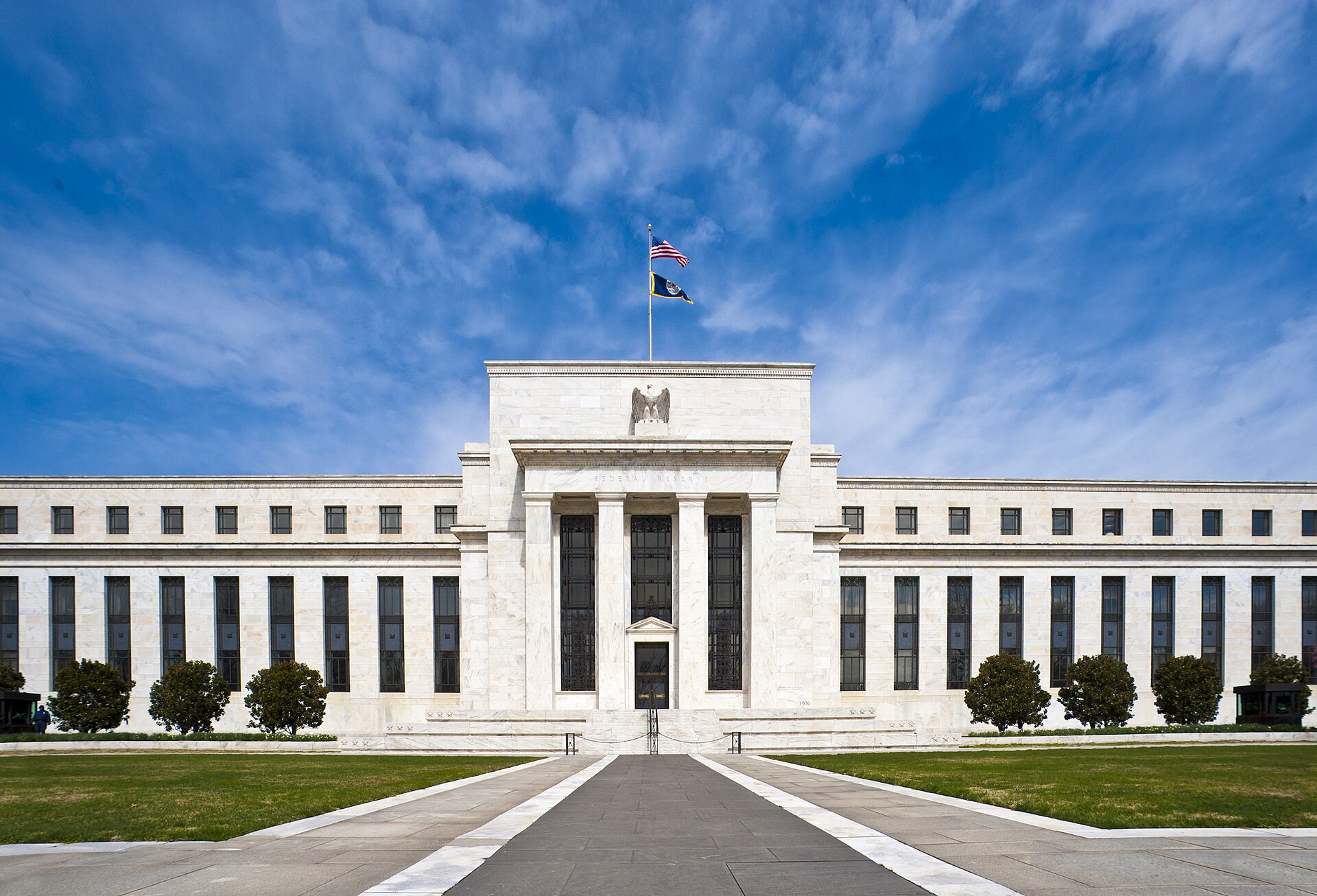
The Federal Reserve Board announced on Friday 4 September 2026 that it had terminated two enforcement actions, both with effect from 2 September 2026. One was a cease and desist order against United Texas Bank of Dallas, dated 29 August 2024. The other was a written agreement with Quontic Bank Acquisition Corp. and Quontic Bank Holdings Corp. of Astoria, New York, dated 5 July 2023. The release carries the names and the dates and nothing further.
Neither termination ended the supervision behind it. In the Dallas case the Board was closing a file on a bank it had not supervised since 12 June 2026, and the obligations the 2024 order imposed had by then been rewritten, article by article, into an order held by a different agency, with a test in it that the Federal Reserve order never contained.
The obligations changed hands
United Texas Bank applied to the Office of the Comptroller of the Currency on 12 November 2025 to convert into a national bank, a move that takes a lender out from under the Federal Reserve. The Board has to say whether it objects, and on 15 May 2026 it said it did not. In the same release the Board said the OCC had submitted a supervisory plan for addressing the matters underlying the enforcement action, to which the Board also did not object.
The conversion was consummated on 12 June 2026. Structure records held by the Federal Deposit Insurance Corporation for certificate 26626 show the chartering agency, the class, the primary regulatory agency and the legal name all changing that date, with trust powers granted the same day.
The OCC did not take the bank on unconditionally. Its approval, the consent order says, was conditioned on the bank entering, upon consummation of the conversion, a consent order incorporating the corrective actions required in the 2024 order. The bank's directors signed on 15 June 2026. Kimberly Einspahr, Assistant Deputy Comptroller for the Dallas/Ft. Worth Field Office, signed on 16 June 2026, under Docket No. AA-ENF-2026-29.
That order carries the 2024 workstreams forward as its articles: compliance reporting, board oversight, a BSA/AML compliance program, customer due diligence, suspicious activity monitoring and reporting, and OFAC compliance. In each the bank is required to continue to implement the plan already approved under the Federal Reserve order. The document then adds something the earlier one did not. The bank's customer risk assessment must reach the level needed to identify any nested financial institution or foreign shell banking activity, and its BSA/AML program must address the findings of an examination that commenced on 2 September 2025, a report that is not public.
The OCC announced the new order in its enforcement release of 16 July 2026, describing the bank as having consented to its issuance as part of its conversion to a national bank supervised by the OCC, and citing OCC Corporate Decision 1375, a document this desk did not retrieve.
A governor said so at the time
Section 612 of the Dodd-Frank Act bars the Comptroller from approving a conversion while a bank is under a formal enforcement order on a significant supervisory matter. On the day the Board cleared the bank to go, one governor objected on the record.
"Section 612 is designed to limit regulatory arbitrage, the practice of 'charter shopping' by banks to avoid robust supervision and enforcement actions. Section 612 removes the ability of a bank to automatically change charters when it faces tough scrutiny or enforcement actions. Any request for a statutory exception should be viewed in light of these objectives and should rarely be granted unless there are compelling reasons to do so. I do not believe the request for this charter conversion has made a compelling argument. The issues raised by the public enforcement action include quite serious problems regarding the bank's anti-money laundering and terrorist financing practices."
That is Governor Michael S. Barr, in his Statement on Conversion of United Texas Bank, published on the Board of Governors' own site on 15 May 2026. How the Board voted is not established, nor whether Barr's statement was a recorded dissent.
What the 2024 order required
The order the Federal Reserve has now terminated was Docket No. 24-021-B-SM, and simultaneously Texas Department of Banking Department Order No. 2024-025. It followed an examination of the bank as of 22 May 2023 by the Federal Reserve Bank of Dallas and the Texas Department of Banking, which the order says identified significant deficiencies in the bank's corporate governance and in oversight by its board and senior management, and significant deficiencies related to foreign correspondent banking and virtual currency customers.
It set six remedial workstreams: board oversight within 90 days, and within 60 days each, corporate governance, a revised BSA/AML compliance program, customer due diligence, suspicious activity monitoring and reporting, and OFAC compliance. Written progress reports were due quarterly, within 30 days of each quarter end. The governance plan had to address an independent third-party report dated 31 January 2024, and the compliance program a second one dated 3 July 2024. Chief executive Greg Quarles signed for the bank, Ann Misback for the Board of Governors, and Banking Commissioner Charles G. Cooper for Texas.
The order was joint, so half of it belongs to Texas. The Federal Reserve's September release speaks only for the Board, and no document showing that the Texas Department of Banking terminated its side was located.
United Texas Bank, National Association, of Dallas, was established on 7 April 1986 and held $1,053,439,000 in assets and $790,843,000 in deposits at 30 June 2026 across three domestic offices.
Quontic ran the other way
The second termination moved in the opposite direction. The written agreement, Docket No. 23-010-WA/RB-HC, was struck between the two Quontic holding companies and the Federal Reserve Bank of Philadelphia rather than the Board. It barred them, with immediate effect, from declaring or paying dividends, repurchasing shares, making any other capital distribution including interest payments on subordinated debentures, or incurring, increasing or guaranteeing debt, without prior written approval from the Reserve Bank on at least 30 days' notice. It required a written capital plan and cash flow projections within 60 days, notice within 45 days of any quarter in which capital ratios fell below the plan's minimums, and quarterly board-level progress reports.
The agreement existed to support an OCC consent order on the bank itself, entered on 5 October 2022 under Docket No. AA-ENF-2022-25, which replaced a formal agreement dating from 29 October 2018. That order required a total capital ratio of at least 13 percent and a leverage ratio above 9 percent, a compliance committee of at least three members with a majority of non-employee directors, and a strategic plan covering at least three years.
The OCC terminated it on 30 June 2026, two months before the Federal Reserve released the holding companies, saying the safety and soundness of the bank and its compliance with laws and regulations did not require the order's continued existence. Quontic announced that termination on 16 July 2026. "This milestone is a testament to the extraordinary commitment of our entire organization," chief executive George Lazaridis said in the company's release. The company has not commented publicly on the Federal Reserve's September action.
Quontic Bank, of Astoria, was established on 14 March 2005 and held $787,018,000 in assets and $693,923,000 in deposits at 30 June 2026 from a single domestic office.
What is not on the record
No document explains why the Federal Reserve waited from 12 June 2026, when it lost supervisory authority over United Texas Bank, until 2 September 2026 to terminate the order. Nothing located shows that the replacement order has been terminated; it carries no end date and requires quarterly reporting until it is lifted in writing. Nothing states what, if anything, replaced the dividend and debt restrictions on the Quontic holding companies, and that bank's capital ratios were not retrieved, so whether it met the 2022 thresholds cannot be said. United Texas Bank has made no public statement this desk could find, on the conversion or the termination.
More from Money
Eleven pre-IPO funds, more than 800 investors, and the markup the SEC says nobody was told about
A civil complaint filed in Manhattan federal court on 14 August 2026 alleges that Andrew Spaventa and three companies he controls raised more than…
The $34,200 Line That Decides Whether Anyone Looks Inside the House
A mortgage written at or below $34,200 escapes the interior appraisal that federal law otherwise demands, and the figure that draws that line has…
A $9 million military lending settlement, and redress that has not arrived
FirstCash agreed in July 2025 to set aside five million dollars for servicemembers the Bureau says were charged above the military rate cap, and the…