
A $9 million military lending settlement, and redress that has not arrived
FirstCash agreed in July 2025 to set aside five million dollars for servicemembers the Bureau says were charged above the military rate cap, and the court-appointed administrator reports that the work of deciding who is eligible is still going on.
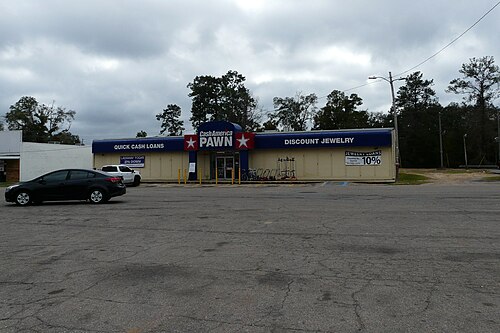
Fourteen months ago, on 11 July 2025, Judge Mark T. Pittman of the federal district court in Fort Worth entered a stipulated final judgment against FirstCash, Inc. and nineteen of its pawn-lending subsidiaries. The money that judgment describes has not reached the people it was written for. The administrator running the redress programme says the process of determining who is eligible is still ongoing.
The order's numbers are exact. Within 30 days the defendants had to reserve or deposit $5,000,000 into a segregated redress account, a starting point rather than a payout: if the redress owed comes to more, the company must add to it, and if it comes to less, it may recoup the difference. A civil money penalty of $4,000,000 was payable separately to the Consumer Financial Protection Bureau within 10 days, with no tax deduction allowed. Those two figures are the $9 million headline. The Bureau had already identified 42,698 pawn loans, made between 3 October 2016 and 25 August 2024, that it asserts warrant redress.
What the money is meant to buy
The order pays on two tiers, and the split describes the product better than any adjective would. A borrower who redeemed the pledged item receives 120 per cent of all fees, interest and other charges paid, principal excluded. A borrower who did not redeem receives those charges plus a further payment equal to the full principal of each non-compliant loan, because that borrower lost the pledged object as well as the money.
That is the economics of pawn lending written backwards. A pawn loan is collateralised and non-recourse: the shop keeps the watch or the ring, and if the customer does not return, sells it. There is no collection action and no credit file entry, and the lender's exposure is the resale value of a small object. The price, though, is a fee on a small and short principal. FirstCash's average US pawn loan was $312 at the end of 2025, and pawn loan fees were 46 per cent of consolidated net revenue, according to the company's annual report filed in February 2026. A monthly fee on $312 annualises into triple digits without anyone having to be greedy about it.
Why the cap for servicemembers is drawn wider
The Military Lending Act limits the cost of consumer credit to a covered borrower to a 36 per cent annual percentage rate. The measure is not the Truth in Lending figure a consumer normally sees but the Military Annual Percentage Rate, defined in Department of Defense regulations to sweep in charges and fees that Regulation Z leaves out of the disclosed APR. The gap is deliberate, and it is why a pawn product can sit inside state law and outside the federal cap at once.
Congress did not stop at price. The statute also bars mandatory arbitration, requires the rate to be stated before credit is extended, and forecloses the collection machinery: no repayment by military allotment, no vehicle title or account access as security, no rollovers. A servicemember's debt is a command problem as much as a household one, reaching into clearances and readiness. The remedy is correspondingly blunt: a contract with a covered borrower that fails any provision of the Act is void from inception. Pawn brokers were brought inside the rules in July 2015, with compliance required from 3 October 2016, which is why the redress window opens on that date.
What the loans cost remains an allegation. In its amended complaint, filed on 21 June 2022, the Bureau said that between June 2017 and May 2021 FirstCash and Cash America West made over 3,600 pawn loans to more than 1,000 covered borrowers in Arizona, Nevada, Utah and Washington, all carrying a rate above 36 per cent, with rates it described as frequently exceeding 200 per cent. Those four states are about 10 per cent of the company's nationwide pawn transactions, and that window the only period for which the Bureau held data. FirstCash neither admitted nor denied the allegations, and the order carries no rate figures at all.
The repeat offender line, and its date
The Bureau's sharpest words are nearly five years old, not fourteen months old. Announcing the lawsuit on 12 November 2021, its then director, Rohit Chopra, said:
"FirstCash is a repeat offender and cheated military families over and over again."
The theory had a basis. In November 2013 the Bureau issued an administrative order against Cash America International, based in part on Military Lending Act violations, barring that company and its successors from further breaches, and the amended complaint pleaded the loans made from 2016 onward as violations of it. The July 2025 settlement release carries no quotation from any named Bureau official. And on 22 July 2025, eleven days after the new order was entered, the Bureau terminated the 2013 order, saying the predecessor had met its obligations, no longer exists, and sold products unconnected to FirstCash's.
In a statement filed as an exhibit to a Form 8-K on 11 July 2025, chief executive Rick Wessel said the company rejected the Bureau's account of its military lending but had chosen to settle. The same filing put consumer redress at an estimated $5 million to $7 million and the fine at $4 million, to be reflected in GAAP results for the second quarter of 2025.
Compliance at the counter
The order does not tell FirstCash to price differently. It offers a choice: the Defense Department safe harbor on every pawn transaction, or a compliant product for covered borrowers. Enforcement is then a till script. One exhibit prescribes in-store signage reading "ARE YOU ACTIVE DUTY MILITARY OR A MILITARY DEPENDENT? If so, you may qualify for a lower interest rate on your pawn", another a point-of-sale questionnaire that locks any yes answer so a clerk cannot reverse it without store-manager approval. Whether a borrower gets the capped rate turns on whether the question is asked and the customer is carrying a military ID.
Much remains unknown. No document states how many servicemembers and dependents were affected: 42,698 counts loans, not people, and the complaint's figure of more than 1,000 borrowers covers four states and four years. No document states what has been paid, and the Bureau has said nothing on the plan's progress since July 2025. Nor is there a fixed claims deadline, despite dates circulating elsewhere: the administrator states only that a payment election form must be returned within 30 days of receiving an individual redress notice.
A clock runs all the same. Five years after the effective date, whatever remains in the account passes to the Bureau, and the defendants stop honouring claims.
More from Money
Eleven pre-IPO funds, more than 800 investors, and the markup the SEC says nobody was told about
A civil complaint filed in Manhattan federal court on 14 August 2026 alleges that Andrew Spaventa and three companies he controls raised more than…
The $34,200 Line That Decides Whether Anyone Looks Inside the House
A mortgage written at or below $34,200 escapes the interior appraisal that federal law otherwise demands, and the figure that draws that line has…
The Federal Reserve ended a bank order it had already handed away
The Board terminated its 2024 enforcement action against United Texas Bank of Dallas this month, months after the bank left Federal Reserve…