
Oklahoma Pension Fund Names Page and Brin Personally in Alphabet Board Suit
A public pension fund has filed a stockholder derivative complaint on behalf of Alphabet against ten of its directors, alleging that the board let privacy violations run unchecked and cost the company billions, and naming the two co-founders as controlling stockholders.
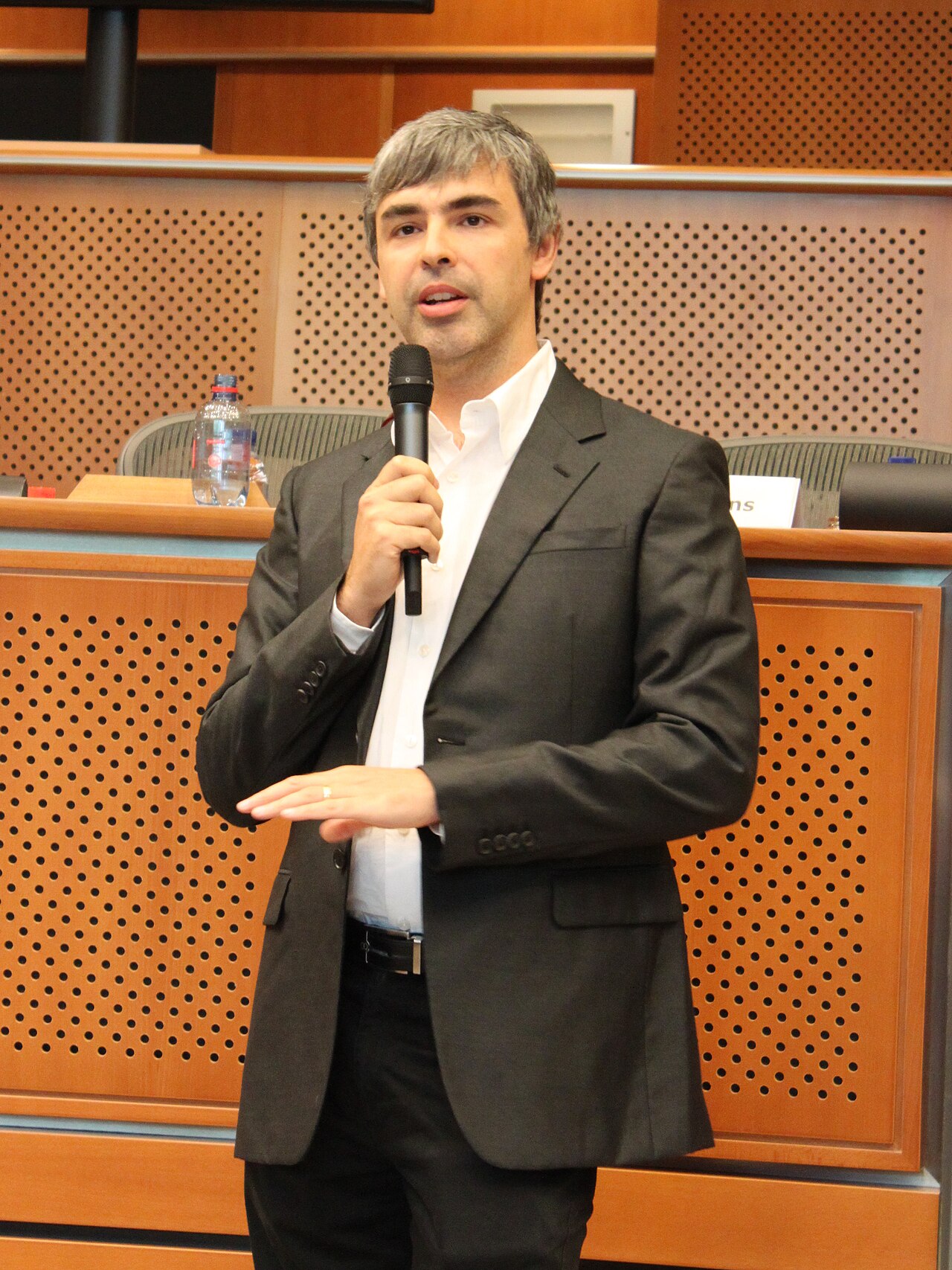
A pension fund for Oklahoma law enforcement officers has filed a 148-page verified stockholder derivative complaint against the board of Alphabet Inc., naming co-founders Larry Page and Sergey Brin among the defendants and asking a federal court to hold them personally answerable for what it alleges was a years-long failure of privacy oversight.
The case is captioned Oklahoma Law Enforcement Retirement System v. Page. It was filed on 22 September 2026 in the U.S. District Court for the Northern District of California, San Jose Division, under docket number 5:26-cv-10809. The court records the cause as a federal-question securities violation, and the plaintiff has demanded a jury trial.
Everything that follows is drawn from that complaint, and everything in a complaint is an allegation. Nothing in it has been tested. As of 23 September 2026 the docket held two entries, the complaint and a proposed summons, no judge had been assigned, no defendant had answered, and no order or opinion of any kind had issued.
The founders are named in their own right
A derivative suit is brought for the company, not against it, so Alphabet Inc. appears only as a nominal defendant. The people the fund is suing are ten directors and four current or former officers. The directors named are Page, Brin, chief executive Sundar Pichai, Frances Arnold, John L. Hennessy, R. Martin Chávez, L. John Doerr, Roger W. Ferguson Jr., K. Ram Shriram and Robin L. Washington. The officers are Pichai, who is counted in both groups, Ruth Porat, Keith Enright, Kent Walker and Lee-Anne Mulholland.
The complaint puts Page and Brin in a category of their own. At paragraph 38 they alone are defined as the Controlling Stockholder Defendants, and the fourth claim for relief is pleaded against the two of them in that capacity. The pleading describes Page as the second richest person in the world and Brin as the fifth-richest. It cites no source for either description, and neither was checked against any wealth ranking for this piece.
Citing Alphabet's own proxy statement of 24 April 2026, the complaint pleads that Page holds 389,051,160 shares of Class B common stock, 46.5 per cent of the super-voting class, controlling 27.4 per cent of total voting power, and that Brin holds 37,469 Class A shares and 358,939,978 Class B shares, 42.9 per cent of the class, controlling 25.3 per cent. Alphabet's proxy carries the same figures in its beneficial ownership table. The complaint pleads that as of 31 March 2026 the pair together held 747,991,138 Class B shares and 52.7 per cent of the vote. Page has chaired Alphabet's Executive Committee since April 2018; both men have been directors since Google's inception in September 1998.
The complaint quotes the founders describing that structure themselves, in the letter they wrote to shareholders at Google's flotation.
The main effect of this structure is likely to leave our team, especially Sergey and me, with increasingly significant control over the company's decisions and fate, as Google shares change hands. After the IPO, Sergey, Eric and I will control 37.6% of the voting power of Google, and the executive management team and directors as a group will control 61.4% of the voting power. New investors will fully share in Google's long term economic future but will have little ability to influence its strategic decisions through their voting rights.
What the complaint says the board allowed
The fund pleads seven claims: two for breach of fiduciary duty against the directors, one against the officers, one against Page and Brin as controlling stockholders, unjust enrichment, and violations of Sections 14(a) and 29(b) of the Securities Exchange Act.
At paragraph 5 the complaint alleges that under Page and Brin, Alphabet adopted what it calls a "pay the speeding ticket" business model, in violation of Delaware law. At paragraph 6 it turns on the directors.
For the Board's part, it sat supine as the Company executed Page/Brin's "pay the speeding ticket" business model.
At paragraph 416, in the claim pleaded against the two founders alone, it alleges that they "violated and breached their duties of loyalty, good faith, due care, oversight and candor by creating a culture of lawlessness within Alphabet". Those are the plaintiff's words in a civil pleading. No authority has made any such finding.
The bill the complaint adds up
The financial spine of the case is a 23-line table at paragraph 170 totalling $4,492,500,000 in privacy-related fines, penalties, settlements and judgments since 2019. The largest single line is a $1.375 billion Texas Attorney General settlement, announced 9 May 2025 and executed 31 October 2025, resolving the Texas biometric litigation and the Texas incognito and location-tracking litigation. Below it sit a $425 million jury verdict for plaintiffs in the Web and App litigation on 3 September 2025, a $391.5 million multistate attorney general location-tracking settlement in November 2022, a French enforcement action of $379.8 million, and a $170 million children's-privacy settlement split between the Federal Trade Commission and New York in September 2019.
That total is the complaint's own tally. The individual lines were not independently checked against each regulator's or court's records for this piece. Only two are corroborated by a second primary document: the $425 million verdict and a 50 million euro French fine both appear in Alphabet's 2026 proxy, in the supporting statement of a shareholder proposal.
The complaint also reproduces pay tables, giving Ruth Porat's compensation for 2020 to 2025 as $176,654,613.
Books, records and a shareholder vote
The suit follows a documents demand served under Delaware law on 19 November 2025. By letter of 23 January 2026 Alphabet agreed to produce board minutes and materials for a two-year window, plus material relating to one class action. It produced 2,193 pages for the later window and 2,707 for the earlier one. The complaint states that large portions of both were redacted as "Not Responsive", and its own footnotes show passages of its oversight narrative elided. Those minutes are not on the public docket and cannot be read independently.
What the fund says it found is set out at paragraph 14.
"The books and records Alphabet produced reveal scant Board-level consideration of many of the significant privacy issues that have exposed the Company to substantial legal, financial, and reputational harm."
No pre-suit demand was made on the board. The complaint argues demand would have been futile because every member faces a substantial likelihood of liability and at least half lack independence.
Five months before the suit, the board answered a version of the same charge. Proposal Number 11 at Alphabet's 2026 annual meeting, filed by Zevin Asset Management on behalf of Denise and Gerald Bergman, asked for public reporting on risks arising from gaps in the company's data policies, controls and oversight systems. The board recommended a vote against it: "Our multi-layered framework already addresses the fundamental concerns of this proposal. Our Board believes that our existing policies and technical safeguards effectively mitigate the risks cited by the proponent."
It failed on 5 June 2026, with 743,788,468 votes for and 11,587,651,785 against, on a structure in which Class B shares carry ten votes each. Three other privacy- and AI-related proposals failed at the same meeting.
What has not been established
The prayer for relief asks the court to award Alphabet damages, order the defendants to disgorge compensation, and order governance reforms including a board-level reporting and information system. No dollar figure is demanded.
Alphabet has issued no public response to the suit that this desk could find, and no statement from any of the fourteen named individuals was located. Whether the board has formed or will form a special litigation committee is not established, and no judge has been assigned. There is, so far, no ruling to report.
More from Billionaires
Bill Gates became the sole trustee of an $89bn endowment, and the document that did it is filed with the foundation's tax return
The foundation's 2024 tax return carries, as a filed attachment, the trust amendment under which Melinda French Gates resigned every position and…
Carlos Slim's family has sold Talos Energy stock all year, and September took the stake to 23.4 per cent
Filings by Carlos Slim Helú, six of his children and the family holding company record seven disposals of Talos Energy stock this year, the latest…

A Billionaire Hedge Fund Founder Is Reportedly Helping Fund the Sussexes' Return to Britain
Ian Wace, who runs Marshall Wace and owns a private Scottish island the family visited in July, is said to have offered both friendship and financial…